Advance the future of medicine at Tufts GSBS with an MS in Pharmacology & Drug Development designed to turn scientific discovery into real-world health solutions.
Advance the future of medicine at Tufts GSBS with an MS in Pharmacology & Drug Development designed to turn scientific discovery into real-world health solutions.
Earn a Pharmacology Degree at the Forefront of Biomedical Science
Tufts’ Master of Science in Pharmacology & Drug Development (PDD) is a two-year, full-time program in Boston that combines pharmacology coursework, hands-on lab research, and an optional industry internship. The program starts in September and runs through graduation in May, roughly two years later.
MS in Pharmacology & Drug Development Program Overview
The MS in Pharmacology & Drug Development at Tufts Graduate School of Biomedical Sciences is a two-year, full-time degree that prepares students for careers in pharmacology, drug development, and biomedical research.
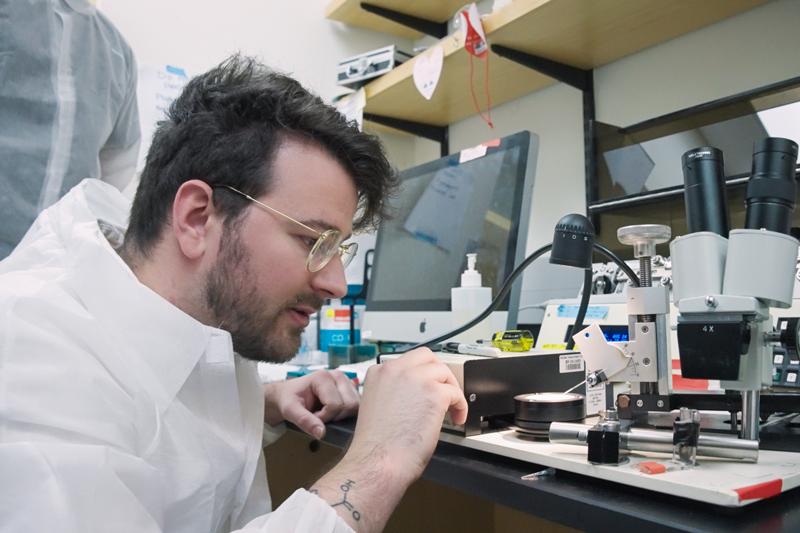
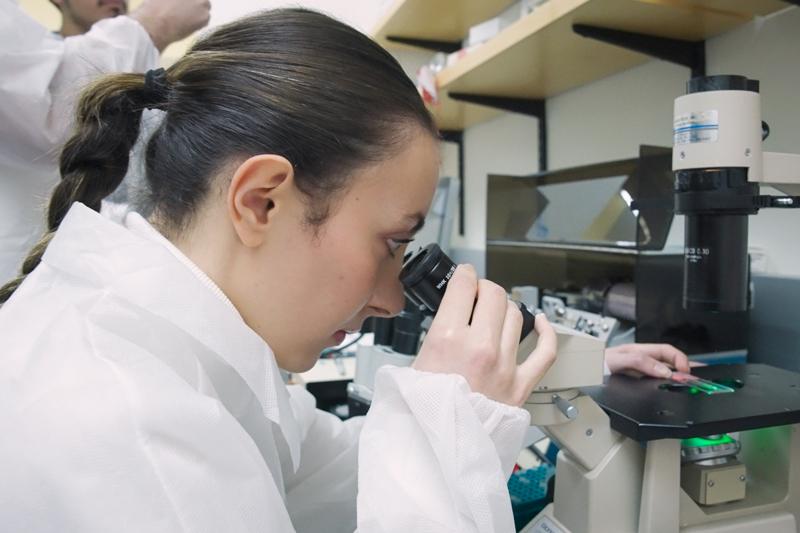
The program is built for students who want rigorous, lab-based training alongside real-world industry exposure, through two first-year research rotations, an optional industry internship, and a thesis project developed under a faculty mentor.
Whether your interest is drug metabolism, cancer pharmacology, or neuropharmacology, you'll train alongside 44 core and adjunct faculty and gain access to 23 active research labs spanning the field.
Students complete a rigorous, interdisciplinary curriculum in basic and clinical pharmacology, two first-year lab rotations, and a thesis project developed with a faculty mentor.
Two first-year lab rotations across 23 research labs
Minimum of three elective courses to match your interests
Weekly Journal Club and Graduate Seminar each semester
Optional summer internship at a biotech or pharmaceutical company
Career services support through graduation and beyond
The PDD program offers a rigorous, interdisciplinary curriculum spanning basic and clinical pharmacology, translational pharmacology, and experimental therapeutics.
With a balance of required and elective courses, students gain expertise in biomedical research, pharmaceutical sciences, and regulatory frameworks that shape modern drug discovery and translational medicine. Through core coursework, hands-on research, graduate seminars, journal clubs, and exposure to industry practices, students remain at the forefront of biomedical science, preparing them to excel in biotechnology, drug discovery and development, and regulatory science.
Students complete two lab rotations during their first year, working with renowned faculty on cutting-edge biomedical research. These rotations allow students to develop expertise in pharmacology, translational pharmacology, and drug development methodologies, while gaining hands-on experience with advanced experimental techniques.
Following the rotations, students are matched to a lab where they will work on their thesis project, which may lead to publishable results and provide a competitive edge in both academia and industry.
Boston is a global center for pharmaceutical innovation, and the PDD program puts students close to its biotech companies, pharmaceutical firms, and research institutions.
Students benefit from networking opportunities, guest lectures, and potential internships with leaders in drug discovery, biotherapeutics, and clinical research, building connections that carry into their careers in pharmaceutical sciences and biomedical research.
Our expert faculty specialize in pharmacy, molecular biology, immunology, neuroscience, and translational medicine, providing mentorship, research opportunities, and industry insights. Students collaborate across disciplines, engaging with adjunct PDD faculty from Tufts University School of Medicine and other schools, including Arts & Sciences, Engineering, Dental Medicine, and Nutrition. With access to cutting-edge labs, students gain hands-on experience in drug discovery, biotherapeutics, and experimental therapeutics, preparing them to drive innovation in the field.
Beyond classroom and lab work, students build a strong professional network and advance their career growth through collaborative workshops, campus organizations, and events connecting them with faculty and industry leaders. Meet our current PDD students to learn about their academic interests and lab placements.
I had a valuable two-year experience in the program. I worked in three different labs with experienced advisors, which helped me learn many practical and specialized techniques related to my research. I’ve always been interested in neuroscience, and this program gave me a chance to explore it further. My advisor was very supportive and guided me throughout, helping me feel well prepared for after graduation.
Graduates of the PDD program are well-prepared for careers in pharmacology, drug development, regulatory affairs, and clinical research. Of the 107 students enrolled since the program began in 2013, 100% completed their degree in an average of 1.7 years.
Over 40% of Tufts PDD graduates move directly into biotech and pharma roles.
Over 50% of Tufts PDD graduates pursue a PhD, postdoc, or faculty position.
Alumni have gone on to roles at organizations including the FDA and NIH, and others continue into PhD or MD programs, using their expertise to drive scientific breakthroughs in drug innovation.
Diverse Career Pathways in Biomedical Sciences and Drug Innovation
The PDD program empowers students to explore diverse career opportunities and find the exact path or role that aligns with their professional goals. With comprehensive training in experimental therapeutics, translational medicine, and pharmaceutical sciences—paired with dedicated GSBS career mentorship—graduates are fully equipped for success across industry and academia.
Pharmacologists research how drugs interact with the body; safety, side effects, and effectiveness, usually in a lab setting for biotech, pharma, or government agencies like the FDA. Tufts PDD students get this experience firsthand through two first-year lab rotations.
To become a pharmacologist, most students start with a bachelor's in biology or chemistry, then a research-based master's or PhD. The Tufts PDD program is a direct path into the field with two years of coursework and lab rotations, leading to biotech/pharma roles or further PhD study.
No. Pharmacology is research-focused, not clinical practice, so a master's or PhD is the standard path into the field. The Tufts PDD program is built entirely around this research track.
The field is growing faster than most: the Bureau of Labor Statistics projects 9% job growth for medical scientists (the closest tracked category) through 2034, well above the average for all occupations. Over 40% of Tufts PDD graduates move directly into biotech or pharma roles.
The Bureau of Labor Statistics puts the median pay for medical scientists (the closest tracked category) at $100,590 (May 2024). Pay varies by sector, with industry and biotech roles often paying more than academic roles.
Coursework in pharmacology school can be rigorous, but Tufts PDD students spend their first year on two lab rotations before committing to a thesis project, building research skills in stages rather than all at once.
Tufts MS in Pharmacology & Drug Development is a two-year, full-time program at Tufts GSBS in Boston with two first-year lab rotations across 23 research labs, a thesis, and an optional industry internship.
The PDD program welcomes candidates with a bachelor's or professional degree in Pharmacology, Pharmacy, Nursing, Medicine, or the Biological and Biomedical Sciences.
Applicants apply through the Tufts Graduate School of Biomedical Sciences portal. Applications are reviewed on a rolling basis, and shortlisted candidates complete a brief virtual interview with the Program Director and Admissions Director.
Admission is based on your academic background, personal statement, and relevant research experience. Review the complete requirements and required materials before applying.
Students typically finance their education through a combination of options, including self-funding from personal or family savings, employer or government sponsorship, external merit- or need-based scholarships, and public or private educational loans. Explore tuition costs, fees, and financing options to understand the full investment in your degree.
International applicants to the PDD program follow the same application process as domestic students. About 71% of GSBS's MS candidates are international, and Tufts University's International Center offers additional visa and transition support once accepted.