From Medical School to Translational Research: Jainith Patel, M27
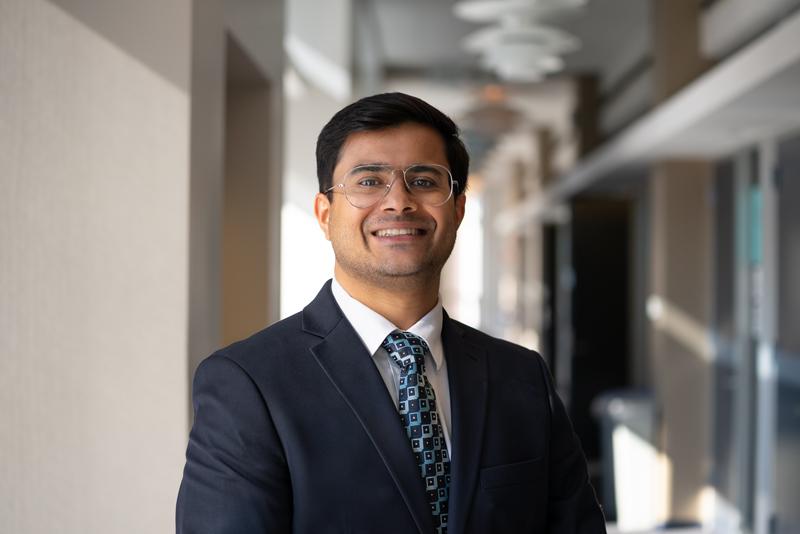
For Tufts medical and veterinary students considering how to strengthen their research training before residency or advanced clinical practice, the Certificate in Clinical & Translational Science (CTS) offers a focused, high-impact opportunity. This 11-month, 16-16.5 credit certificate allows students augument their primary degree program and gain formal training in study design, biostatistics, and translational research methods that directly inform patient care.
In this student spotlight, Jainith Patel, M27, a current MD student at Tufts University School of Medicine, shares why he chose to complete the CTS Certificate. With long-standing research experience and an interest in neurosurgery, Patel explains how the program helped him move beyond project-specific skills to develop a comprehensive, end-to-end understanding of clinical and translational research. His experience highlights how the CTS Certificate can prepare Tufts students to pursue more intentional, independent, and impactful research throughout residency and beyond.
Student Spotlight: Jainith Patel, M27
Why did you choose to pursue this degree?
"I chose to pursue a certificate in clinical and translational science to further strengthen my foundation in study design, biostatistics, and the translation of scientific discoveries into clinical practice. I have been fortunate to be involved in organized research for six years now. However, much of my training has been project-specific, with research skills developed to meet the immediate needs of each study. As someone interested in neurosurgery, I recognize and appreciate that research will remain an integral part of my career. This felt like the right time to pursue formal education to elevate the impact and intentionality of my research."
Why did you choose Tufts to pursue your degree?
"I chose Tufts to pursue my degree because a peer mentor who completed the program at the start of my first year at Tufts University School of Medicine spoke highly of the educational opportunities it provided. Despite having prior research experience, they emphasized how the Clinical and Translational Science Institute helped them develop greater independence and strengthen the skills needed to carry out a study from conception through completion. This experience closely mirrored my own goals of advancing my research abilities before residency. I was also drawn to the program's organized and intentionally structured curriculum, which builds skills from the ground up, beginning with study design and protocol writing and culminating in a complete research project by the end of the year. The availability of dedicated research funding through the T32 NIH grant further reinforced Tufts as the right environment to pursue this degree."
What is the focus of your research, and what questions are you trying to answer?
"My research focuses on spinal amyloidosis and its relationship with cardiac amyloidosis. Under the mentorship of Dr. Riesenburger in the Department of Neurosurgery, I am investigating whether amyloid or misfolded proteins deposited along the spine may contribute to lumbar spinal stenosis. Another interesting area I am studying involves collaborating with our cardiology and pathology departments at Tufts and collaborating institutions to determine whether analysis of surgical spine specimens can help identify patients at increased risk of cardiac amyloidosis. Along with Dr. Riesenburger, I am deeply grateful for mentorship from Dr. James Kryzanski, Dr. Knarik Arkun, and Dr. Ayan Patel in these research efforts."
How as your experience been like so far?
"My experience in the Clinical and Translational Science program at Tufts has been highly formative. The program has provided me with a comprehensive foundation in clinical research and has allowed me to expand my research skills. For example, I recently had the opportunity to branch out and learn how we can apply a health microsimulation framework to model risk in patients. This project was introduced to me by our CTS program director, Dr. David Kent, who is leading innovative work to understand how covert cerebrovascular disease modifies cardiovascular risk, treatment, and clinical outcomes in our patients. I am grateful for this opportunity to learn beyond methods in my comfort zone and to present our findings at the American Heart Association's International Stroke Conference. In addition to the excellent academic experiences, I have appreciated being surrounded by peers from diverse backgrounds. Their perspectives, whether from residency or industry, have enriched my understanding of how clinical and translational research fits into various healthcare careers. Everyone’s unique background has also allowed me to learn how to communicate my research findings to a wider audience in both written and presentation formats."
What is your favorite aspect about the program?
"My favorite aspect of the program is the range of research exposure provided, particularly through courses like study design and our seminar class. In these courses, peers present their study protocols each week, and we discuss ways to strengthen design and address limitations. This approach to learning has helped me improve my own research by seeing practical examples from a variety of projects. The seminar course also exposes us to work from faculty across medicine, public health, translational research, and industry, broadening the types of study designs I feel comfortable engaging with in the literature and applying to my own research questions."
What is your proudest academic/professional accomplishment while at Tufts?
"One of my proudest moments at Tufts was working alongside my mentor, Dr. Riesenburger, to apply for and successfully receive a Tufts Springboard Grant. As someone who aspires to remain involved in research while maintaining a successful clinical practice, I am incredibly proud of my role in helping draft our grant proposal for my first major research grant. I am deeply grateful to Dr. Riesenburger and the Tufts research community for their support of this endeavor, which ultimately paved the way for me to investigate spinal amyloidosis during my time in the CTS program."
What do you wish to accomplish upon completing the CTS Certificate?
"Upon graduation from the CTS program, I plan to return to Tufts University School of Medicine to complete my final year of school and apply into neurosurgery. During my residency training and in my future career as a physician, I look forward to applying the research skills I have gained through this year with the Clinical and Translational Science Institute. I am hopeful that my research can ultimately improve how we care for our patients, and one day, I can inspire, and mentor others interested in research and neurosurgery."
What do you want a prospective student to know about Tufts?
"I want prospective students to know that Tufts offers a wide breadth of research opportunities in all five stages of the translational science spectrum. There are great learning opportunities for both quantitative and qualitative research, and excellent supporting institutes like the Biostatistics, Epidemiology, and Research Design (BERD) institute, which is always eager to provide statistical consultation for students."
Video Highlight: Jainith Patel on the CTS Experience
This short interview offers an inside look at how the CTS curriculum, faculty mentorship, and collaborative learning environment support Tufts students who want to deepen their research training without losing momentum in their medical or veterinary education.
Related Links:
Department:
Certificate in Clinical & Translational Science