
Astrocytes, Aging, and Neural Stability: An MBR Thesis on Brain Homeostasis
How my MBR thesis helped me grow into an independent neuroscience researcher.
| Program Start | Length | Commitment | Format |
|---|---|---|---|
SEPTEMBER | 2 YEARS | FULL-TIME | ON-CAMPUS |
The MS in Biomedical Research (MBR) is a two-year, research-intensive program leading to completion of a Master's thesis. The program provides students with significant research experience and fundamental biomedical science knowledge that will prepare them for a career in academia or the biotechnology and pharmaceutical industry or for further study at the PhD level. Students can choose to pursue their MS degree in one of four disciplines: Genetics, Molecular & Cellular Biology; Immunology; Molecular Microbiology; or Neuroscience.

From the first semester, students in the MS in Biomedical Research program are immersed in active laboratory research environments. Two laboratory rotations allow students to explore research interests, identify the right scientific focus, and select a thesis mentor early in the program. By the beginning of the second semester of the first year, students transition directly into their thesis laboratory, maximizing hands-on bench time and accelerating research progress.
This early immersion model ensures continuous, meaningful laboratory experience throughout the program. Students develop strong experimental skills, gain research independence earlier, and engage deeply in scientific discovery—providing a strong foundation for careers in biomedical research, industry, or doctoral training.
MS students train alongside PhD candidates across four GSBS PhD programs, gaining access to a diverse, interdisciplinary research community. They explore areas such as immunology, host defense, genetics, cell and molecular biology, neuroscience, and microbial pathogenesis, working with over 100 faculty investigators. Core laboratories are located on the Boston Health Sciences campus, home to the Graduate School of Biomedical Sciences, Tufts School of Medicine, Tufts Medical Center, the Friedman School of Nutrition Science & Policy, the USDA Human Nutrition Research Center on Aging, and Tufts School of Dental Medicine. Additional research opportunities are available on the Tufts Medford campus, which houses the College of Arts & Sciences and the School of Engineering, further expanding interdisciplinary and translational research options.
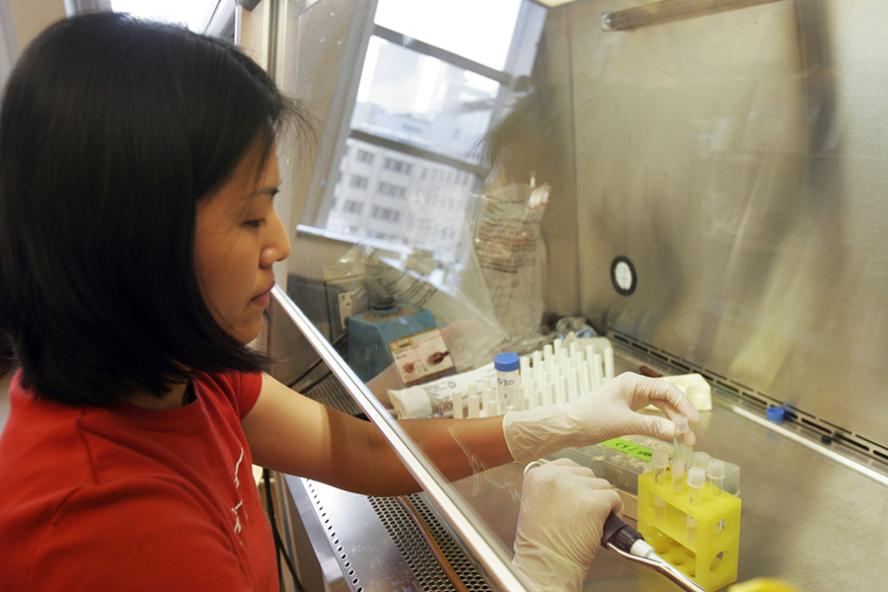

The MBR program delivers PhD-level coursework and academic rigor within a focused, two-year master’s degree. In addition to laboratory training alongside PhD candidates, MBR students complete advanced biomedical science coursework at the PhD level, creating an academically rigorous environment that mirrors doctoral expectations. The curriculum includes core biomedical coursework, an MBR-specific journal club, and research seminars, all supplemented by laboratory rotations during the first semester. Students then select a thesis laboratory in January of year 1 and focus on their MS thesis research project. The program is designed for completion by May of the second year.
The MBR program is built on close faculty mentorship and individualized student development. Small cohort sizes allow for meaningful relationships with faculty, research mentors, and advisors who are deeply invested in student success. Students receive consistent guidance, feedback, and support throughout their academic and research training, creating a highly personalized educational experience.


Independent research is the centerpiece of the MBR experience. Students move quickly from lab rotations into thesis projects, gaining hands-on training, technical expertise, and scientific independence that culminate in a master’s thesis based on original research.
At the same time, MBR students thrive in a collaborative, supportive graduate community, combining the resources of a major research institution with the personalized culture of a small program. Mentorship, peer collaboration, and shared scientific purpose ensure students are supported both academically and professionally.

Our program welcomes applications from US citizens, permanent residents, and international students.

Learn more about financing your education in the MS in Biomedical Research.

Our students come from across the US and the world and are pursuing a wide range of thesis projects.
Peter Juo
Program Director
Jaharis 706
peter.juo@tufts.edu
